
Gravel Driveways That Handle Kansas Weather
New installations, repairs, and culvert work for rural properties in Miami & Franklin Counties. We build driveways that last through rain, freeze, and heavy use.
New Gravel Driveways & Driveway Repairs
Whether you’re building a new rural property or fixing a driveway that’s falling apart, we handle all of it
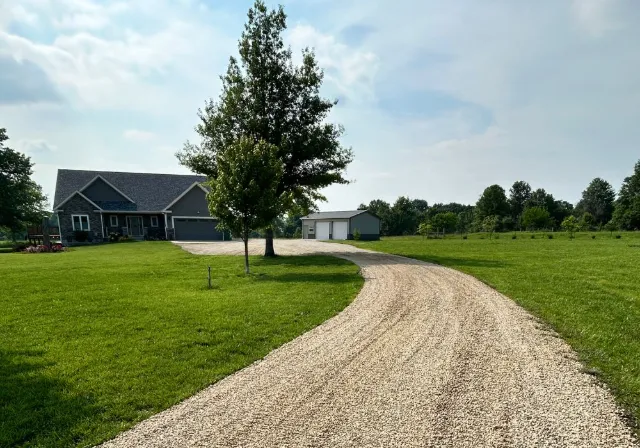
New Driveway Installation
Site assessment, proper grading, culvert installation, base preparation, and gravel placement for long-term performance.

Driveway Rehabilitation
We evaluate your existing driveway, address drainage issues, add base material where needed, and restore it to reliable condition.
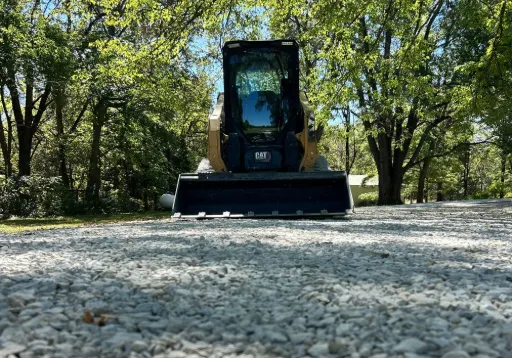
Maintenance & Repairs
Filling ruts, adding fresh gravel, fixing washout areas, and adjusting drainage to extend your driveway’s life.
Driveways Built for Miami & Franklin County Terrain
Your driveway takes a beating from Kansas weather. We assess drainage patterns, prepare a solid base, and install gravel that stays in place year after year.
Proper drainage planning
No more washouts or standing water after storms
County-compliant culvert installation
We handle permits and coordinate with Miami & Franklin County offices
Quality base preparation
The foundation determines how long your driveway lasts
Gravel selection guidance
We help you choose the right material for your property and budget
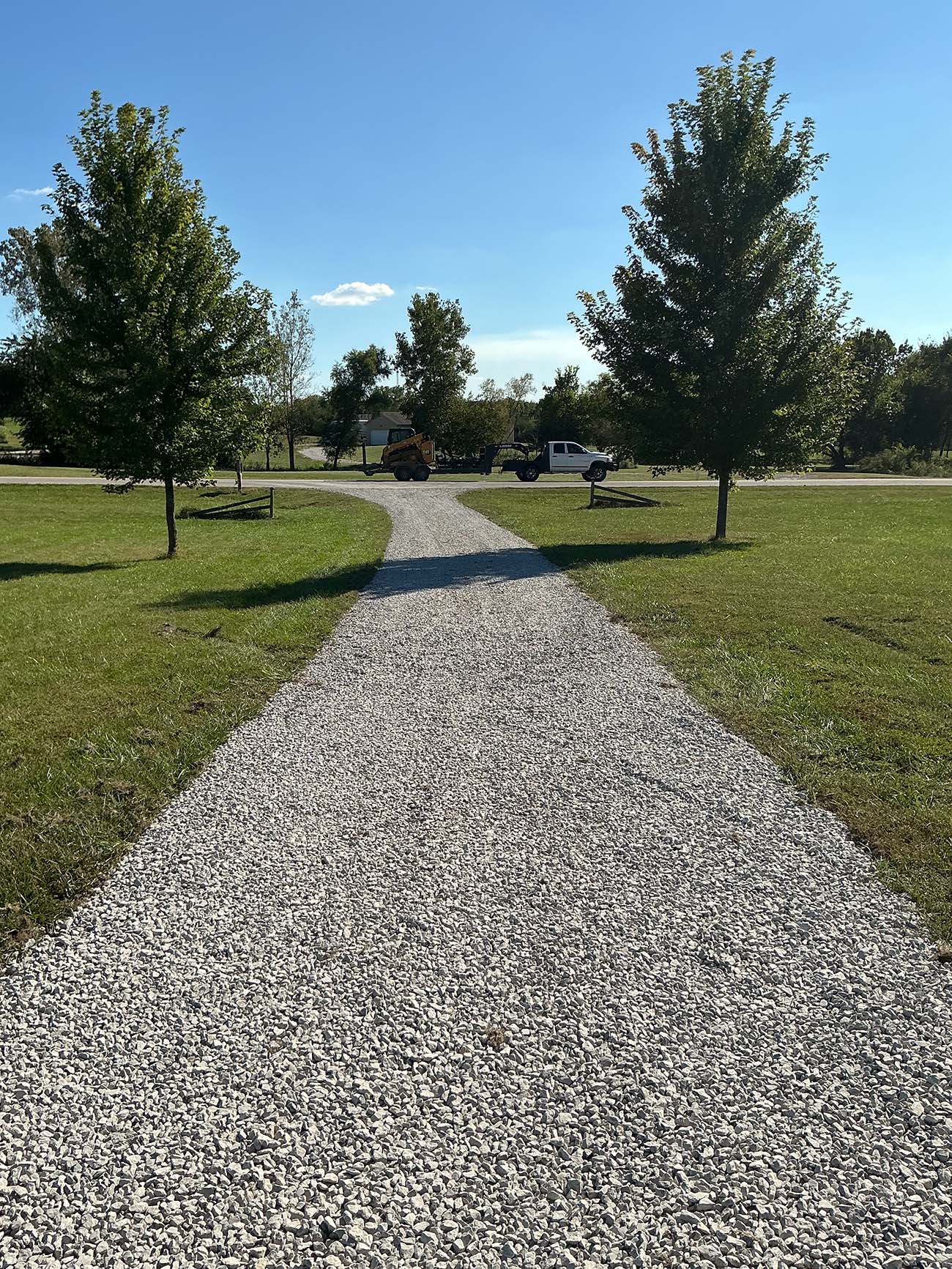
The Glacial Plains Driveway Standard
Local Terrain Knowledge
We understand Miami & Franklin County soil types and how they affect driveway performance.
County Coordination
We handle all culvert permits and make sure installations meet local requirements.
Honest Assessments
We tell you what your property needs before we start – no surprises mid-project.
Reliable Completion
When we give you a timeline, that’s when the work gets done.
Common Questions About Gravel Driveways
Why choose gravel instead of asphalt?
Gravel costs significantly less upfront and is easier to maintain over time. When gravel gets damaged, you add more material and regrade – with asphalt, you’re looking at crack filling, seal coating, or full replacement. Gravel also handles Kansas freeze-thaw cycles better because it flexes with the ground instead of cracking. For rural driveways where you’re covering longer distances, the cost difference adds up fast.
Why choose gravel instead of concrete?
Concrete driveways can cost three to four times more than gravel for the same length. On rural properties with long driveways, that price gap becomes substantial. Concrete also cracks over time from ground movement and heavy equipment, and repairs are expensive. Gravel adapts to settling, drains naturally, and when it needs refreshing, you’re adding material rather than tearing out and replacing.
How long will a gravel driveway last?
With proper drainage and a solid base, a well-built gravel driveway lasts 10-15 years before needing significant work. You’ll want to add fresh gravel every few years to maintain the surface, but that’s routine maintenance rather than replacement. The base we install is the foundation – get that right, and you’re set for the long haul.
Do I need a culvert for my driveway?
If your driveway crosses a drainage ditch or low area, you’ll likely need one. Culverts let water flow under your driveway instead of washing over it or pooling on either side. Without proper drainage, you end up with erosion, soft spots, and gravel washing away every time it rains. We assess your property’s water flow patterns and coordinate permits with the county if installation is required.
Can you repair my existing gravel driveway?
Yes. We start by figuring out what’s actually causing the problems – poor drainage, a thin or damaged base layer, ruts from heavy use, or gravel that’s migrated off the edges over time. Throwing fresh gravel on top of a bad foundation is a waste of money. We fix the underlying issues first, regrade properly, address any drainage problems, and then add new material so the repair actually holds.